





Civic Education Hub

Perception, and the Future of Inclusive Governance in South Sudan

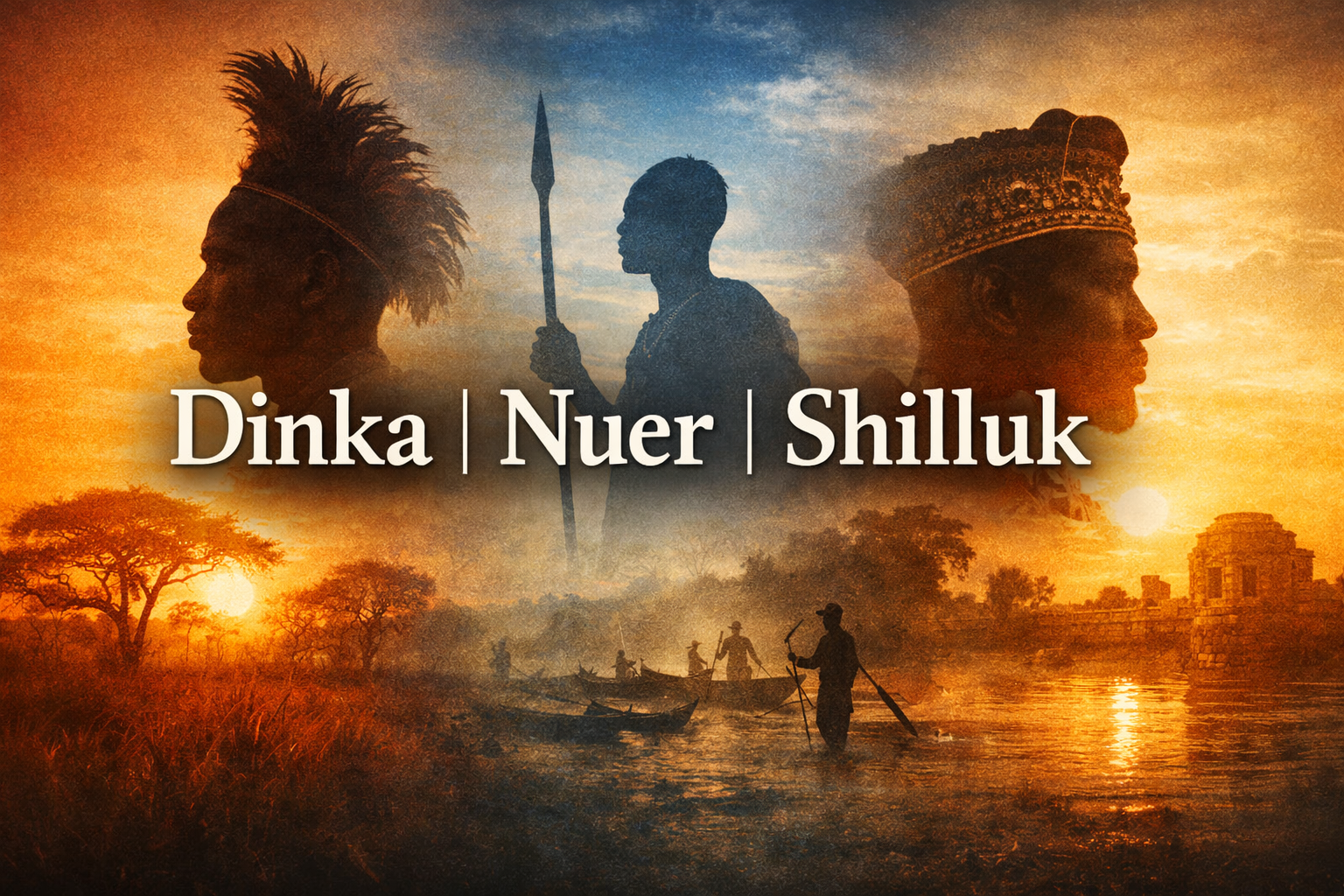
I write this reflection with respect and clarity of intention. It is not addressed against any community, nor does it seek to elevate one people above another. Rather, it speaks to a political reality that deserves honest examination. Many of the most visible political voices in South Sudan today emerge from Dinka, Nuer, and Shilluk heritage. Acknowledging this reality does not diminish the dignity or contribution of other communities. It recognises influence, and with influence comes responsibility.

The concern before us is not identity itself, but perception. When political debate begins to appear as a contest between prominent communities, the wider national imagination narrows. Citizens from smaller or quieter groups may begin to wonder whether governance has become a space reserved for a few. Such perceptions, even when unintended, carry consequences for unity and stability.

History offers a lesson that must be approached with care. After Sudan’s independence in 1956, sections of the political elite believed that liberation had positioned them as the natural custodians of power. Political life became concentrated around established families, religious networks, and party structures linked to the Umma movement, the Ansar tradition, and influential northern elites connected to the Khatmiyya current. Leadership circles formed around inherited legitimacy and ideological confidence. Many of those leaders possessed education, urban exposure, and organisational strength. Yet they miscalculated one essential truth: a nation cannot be sustained by a narrow political imagination.

In the decades that followed, governance increasingly reflected the worldview of a limited elite. Religious symbolism and cultural uniformity were advanced as tools of cohesion, yet they also deepened division. Policies shaped through a single lens overlooked the diverse realities of the wider population. The ruling class often believed that central authority would naturally secure loyalty. Instead, exclusion produced distance, and distance gradually weakened the foundations of the state. The collapse of long-standing political arrangements in later years did not occur overnight. It grew from years of misreading society.

This history is not recalled to assign blame. It is a reminder that liberation movements can lose direction when leadership becomes inward-looking. South Sudan stands at a moment where similar perceptions may arise if political discourse is framed primarily through the rivalry of dominant voices. When narratives suggest that liberation belongs to a select few, the rest of the nation may feel like observers rather than participants.

The danger lies not in community identity, which remains a source of strength and heritage, but in the transformation of tribal belonging into a political boundary. If belonging becomes the primary lens through which governance is interpreted, nationalism weakens. A country is not sustained by competing identities alone. It is sustained by a shared belief that institutions exist for all citizens.

South Sudan differs profoundly from the northern Sudanese context. The north historically possessed strong unifying structures through a common language and religious framework. South Sudan’s unity is grounded instead in a collective attachment to land and memory. Each community carries a deep relationship with its ancestral territory. This reality has protected cultural identity across generations. Yet it also requires careful stewardship. When political competition aligns too closely with communal belonging, governance risks being interpreted as territorial ownership rather than national service.

For this reason, the responsibility placed upon prominent political actors is significant. Leadership must demonstrate, both symbolically and practically, that governance is inclusive. Inclusion is not limited to appointments or titles. It is expressed through equitable service delivery, transparent institutions, and the visible presence of diverse voices within national discourse. Even where positions are limited, fairness in policy and opportunity creates a sense of participation.

Young politicians and emerging leaders should consider the long arc of history. The experience of Sudan illustrates how elite competition, when detached from broader society, gradually erodes legitimacy. The lesson is not that leadership from any particular community is wrong. The lesson is that leadership must resist the temptation to define itself through exclusivity. When politics becomes a constant negotiation among a few powerful voices, the silent majority begins to withdraw from the national project.

It is important to emphasise that questioning perception does not mean targeting people. Communities are not the problem. The challenge lies in how political narratives are constructed and interpreted. A cohesive nation requires language that invites rather than divides. It requires leaders who recognise that every tribe, regardless of size, holds equal moral ownership of the state.

The philosophy of liberation was never intended to create new hierarchies. It sought dignity, equality, and shared responsibility. The independence of South Sudan was built on the sacrifice of many people, including those whose names rarely appear in political debate. To preserve that legacy, today’s leadership must cultivate a political culture that reflects the whole nation.

This reflection is offered in the spirit of inclusion and foresight. A politics grounded in cooperation can strengthen national identity without erasing cultural difference. The alternative, a politics shaped primarily by communal competition, risks turning belonging into a barrier rather than a bridge. If nationalism fades beneath the weight of tribal perception, the idea of country itself begins to weaken.

The future of South Sudan depends not on which community speaks the loudest, but on whether leadership can transform influence into collective trust. When citizens see themselves reflected in governance, unity becomes natural. When they do not, division grows quietly.

The path forward is clear. Build institutions that welcome every voice. Speak in a language that unites rather than ranks. Allow liberation to remain a shared inheritance, not a contested title. In that space, the nation can move beyond suspicion and towards a future shaped by common purpose.

Governance at the Crossroads: When Administrative Expansion Meets Institutional Uncertainty

Many Junubiin today stand in a difficult transition, caught in what we call in Dinka, Anuanë raan cë ye kuɔ̈l käk piny në apuɔ̈k dhɔ̈l, the state of a person halted at a forked path, unsure which direction leads forward. This is not simply a confusion of individuals. It is a deeper institutional uncertainty that emerges when a society moves from liberation into governance without fully reconciling inherited traditions with imported administrative models.

When the idea of self-rule gained momentum, the language of liberation shaped the national imagination. Democracy, freedom, and self-governance became powerful words on the lips of politicians and recruits alike. They carried hope and moral energy. Yet few paused to ask how the Western architecture of governance would transform indigenous societies into something new and unfamiliar.

When independence arrived, and those slogans required practical implementation, the junction appeared. Vision had to become law. Aspiration had to become structure. It was at this point that misunderstanding began to grow, not because the ideals were wrong, but because the mechanics behind them were not fully understood. Power, when combined with limited institutional literacy, often leads to improvisation. Improvisation, when embedded within governance, creates instability masked as progress.

South Sudan’s governance framework is formally decentralised. Decentralisation, in its technical sense, is not fragmentation. It is a lawful distribution of authority regulated by legislation and protected by constitutional principles. Administrative units are meant to emerge through defined processes informed by population realities, fiscal capacity, and service delivery needs. Representative democracy rests on territorial representation shaped by residency and geography, not on ethnographic pressure or assumption.

In many governance systems, administrative expansion follows measurable change. When populations grow, new schools and health facilities follow. Boundaries evolve through evidence and planning. In the South Sudanese context, however, administrative expansion has at times moved ahead of institutional consolidation. Counties, Payams, and Bomas have multiplied in response to genuine aspirations for inclusion and accessibility. The intention to bring government closer to the people reflects a legitimate desire for recognition. Yet when new structures appear without clear legislative grounding or fiscal preparation, uncertainty begins to replace clarity.

This is the crossroads.

At a forked path, a traveller who attempts to step in two directions remains suspended in hesitation. Movement requires decision, and decision requires understanding. When administrative units are created without legal clarity, three consequences begin to unfold.

First, fiscal coherence weakens. Resources become distributed across expanding layers of administration that may lack sustainable capacity.

Second, institutional legitimacy becomes fragile. When processes appear inconsistent with constitutional principles, public trust in governance begins to erode.

Third, civic cohesion faces strain. Governance risks are shifting from service delivery toward negotiation over identity and boundaries, a path that diverts energy away from development.

These reflections do not reject decentralisation. They call for disciplined decentralisation rooted in both law and cultural wisdom. Indigenous governance traditions across South Sudan were consultative, layered, and grounded in collective responsibility. Modern administrative systems introduce technical structures that require planning, data, and legal clarity. The challenge is not to abandon one for the other, but to harmonise them thoughtfully.

A nation at a crossroads must decide whether administrative expansion will be guided by constitutional process or by momentary accommodation. Multiplying administrative units without institutional capacity does not automatically bring development closer to the people. It may instead create overlapping jurisdictions and expectations that governance cannot sustain.

Bringing government closer to the people remains a noble and necessary goal. Achieving it requires patience, institutional literacy, and transparent dialogue. Administrative boundaries should emerge through constitutional interpretation, demographic assessment, and national consensus rather than through assumption alone.

The traveller standing at a forked path does not remain there forever. Eventually, clarity emerges through reflection and wisdom. South Sudan now stands at such a moment, balancing liberation ideals with the responsibilities of structured governance. The direction chosen will determine whether decentralisation strengthens unity or deepens uncertainty.

The crossroads is not a sign of failure. It is an invitation to move forward with discipline, guided by law, informed by culture, and strengthened by collective responsibility.

The Dangers of the Desperate Journey and the Scare that it is Creating for the Next Generation of South Sudanese

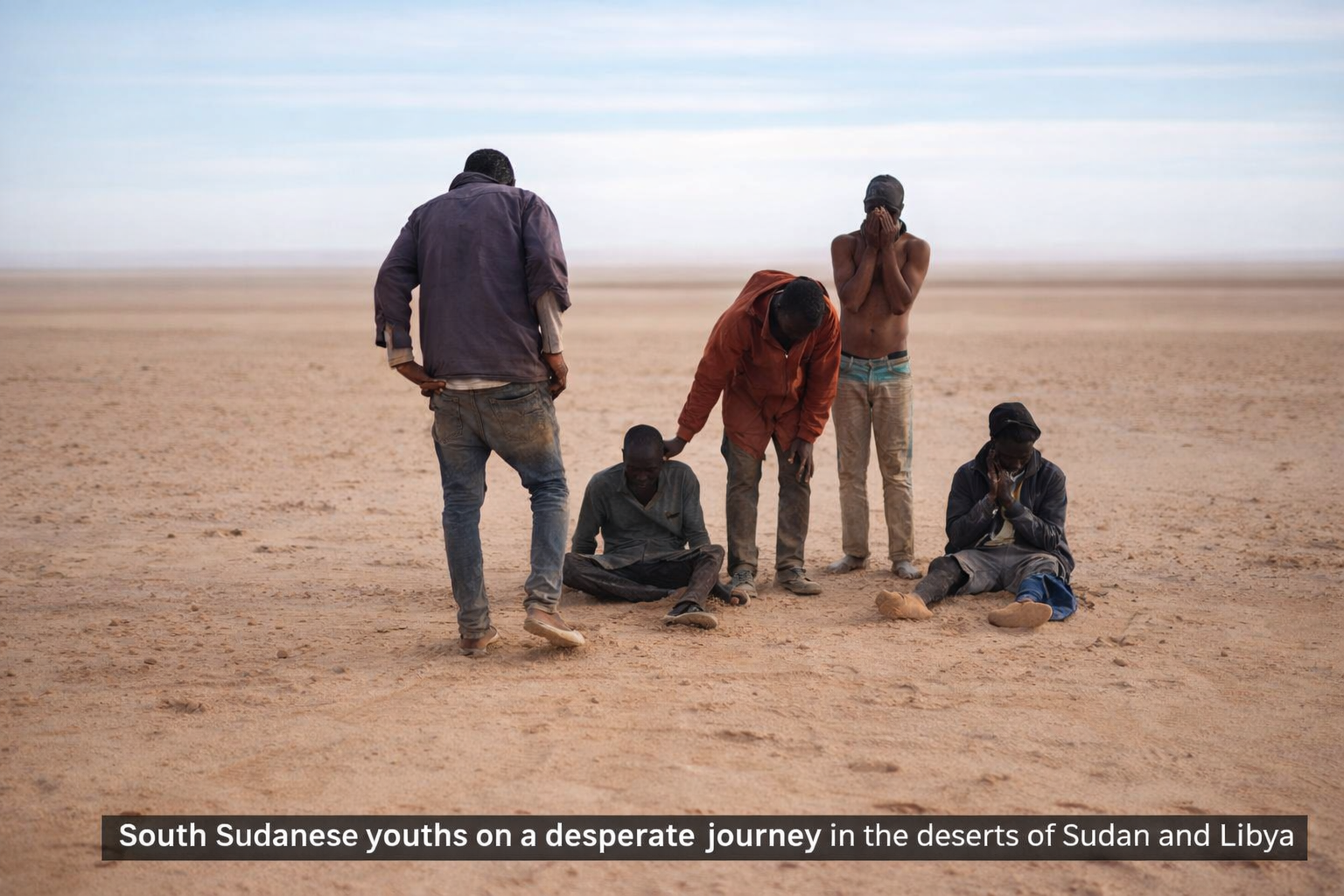
More than five years ago, I interviewed young South Sudanese who had left the country through Egypt, North Sudan, and the desert routes leading into Libya. Their accounts were not stories of opportunity. They were reflections shaped by dehydration, violence, disappearance, and systematic exploitation. Some of those young people did not survive the desert. Others became trapped in conditions resembling enslavement. Several were never heard from again.

One statement from those interviews remains deeply troubling: there was nothing left behind to return to. That perception, whether accurate or not, continues to shape the decisions of many young South Sudanese today.

I write this as someone who has lived in the West, observed migration systems in Australia, Europe, and the United States, and who has also recently returned from South Sudan. The hardship at home is real and visible. Yet the irregular migration route through Libya and across the Mediterranean is not a practical alternative to hardship. It is a high-risk corridor marked by criminal networks, legal uncertainty, and extreme vulnerability.

The first danger lies in the desert route itself. Movement across the Sahara is largely organised through smuggling networks operating without accountability. Individuals are transported in unsafe conditions, often without sufficient water, food, or medical care. Those who fall ill or cannot pay may face abandonment or forced labour. International human rights monitors have documented serious abuses within Libyan detention environments, including violence, extortion, and degrading treatment of migrants.

The second danger is the Mediterranean crossing. Despite awareness campaigns, thousands of migrants continue to die or go missing at sea each year. Boats are frequently overloaded and unseaworthy. Rescue is never guaranteed, and identification of the dead is often impossible. Families in South Sudan and across the region are left without confirmation, closure, or remains to bury. The sea has become an unmarked grave for many young Africans whose journeys ended before reaching safety.

Arrival in Europe does not necessarily resolve these risks. For migrants who reach European shores without valid documentation, legal insecurity becomes a defining reality. Identity verification can take years. During this period, individuals may be placed in reception centres or detention facilities, some of which have been criticised by independent monitors for overcrowding and poor conditions. In parts of Eastern Europe, including Bulgaria, monitoring bodies have reported standards that fall below acceptable humanitarian expectations.

Beyond detention, many migrants face prolonged homelessness, informal labour, and social isolation. Official figures from Western Europe show an increasing presence of non-citizens among rough sleepers in major urban centres where housing shortages are severe. These realities rarely appear in the narratives circulated online, where selective success stories shape public perception. The visible stories of success often overshadow the quieter experiences of those who struggle, wait for documents, or remain trapped in uncertainty.

This gap between perception and reality has become one of the most powerful drivers of irregular migration. Success is visible. Failure is silent. Those who die, disappear, or remain in legal limbo rarely shape the narrative, yet they represent a significant part of the journey’s outcome.

This issue demands a serious and coordinated response from South Sudanese institutions. Public sensitisation must move beyond slogans and address concrete risks such as trafficking, debt bondage, detention, and long-term legal insecurity. Migration should be approached as a protection and governance issue, not merely an individual decision. Young people deserve accurate information, viable opportunities at home, and lawful mobility pathways where they exist.

This article is not written to condemn those who leave. It is written to assert that the loss of young lives through preventable routes is a national concern. A country not only loses its future through conflict. It can also lose it quietly, through deserts, detention centres, and unmarked waters. Addressing this reality is not an act of pessimism. It is an obligation of leadership, law, and conscience.

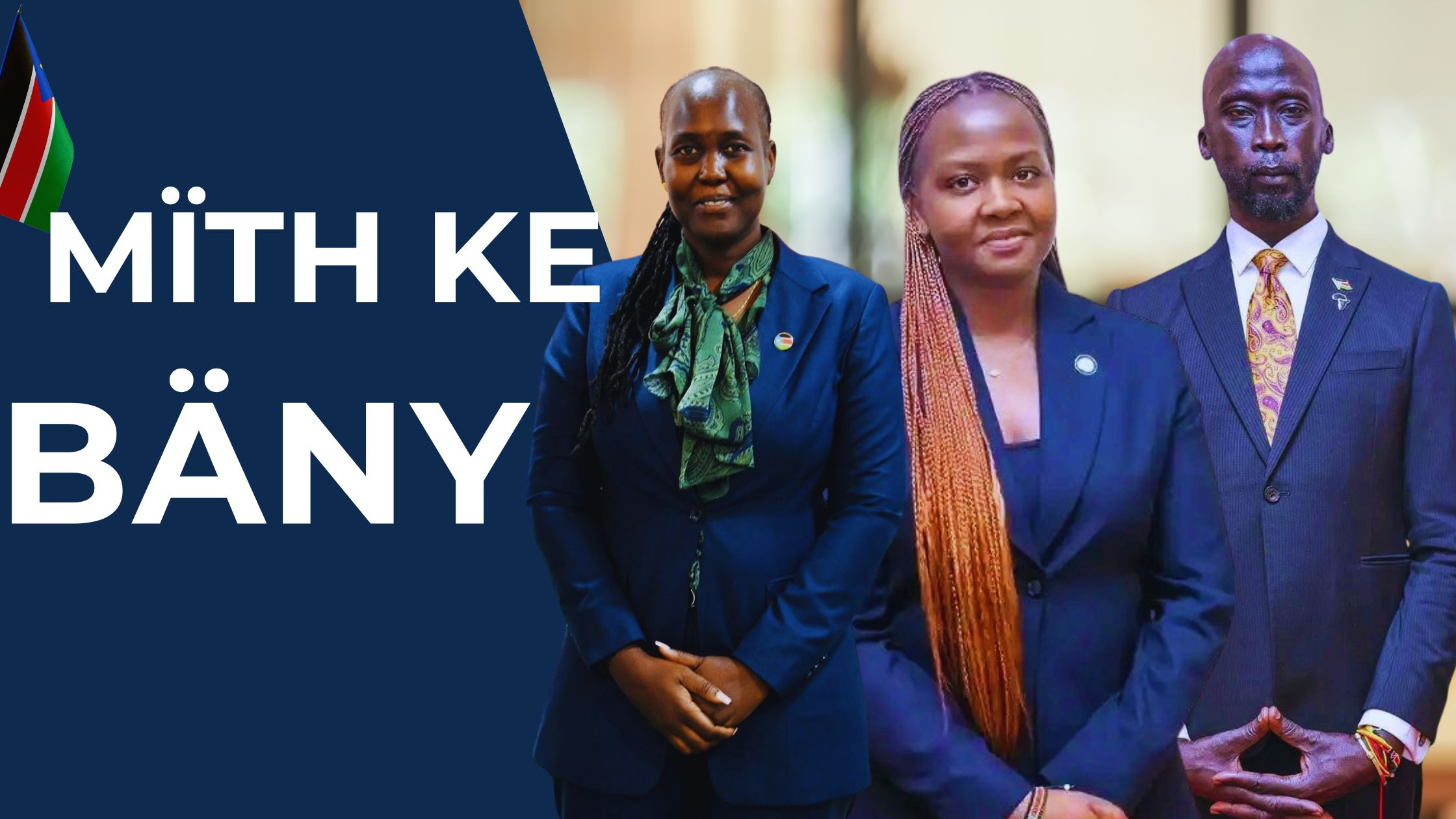
Competence, Youth Leadership, and the Debate on “Mïth Ke Bäny (Children of Ellites)UAE Dubai Accelerates Ahead which was created

Public debate in South Sudan has recently been shaped by the growing use of the phrase “Mïth Ke Bäny” (Children of Ellites), a term often used to suggest that the children of elites are receiving preferential access to leadership.

Read More

Politics, National Interest, and the Line We Refused to Respect

If South Sudanese wish to understand politics beyond slogans, personality worship, and emotional allegiance, they should study at least four countries with functioning political traditions: Kenya, Australia, the United Kingdom, and the United States of America. These countries are not moral sanctuaries. Their politics are often loud, abrasive, and deeply contested. Yet one principle remains largely intact. When it comes to national interest, there is a line that must not be crossed.

Read More

Butternut Squash Potato with Noodle Soup

Aenean feugiat purus vitae sollicitudin laoreet. Duis fringilla ligula vel velit lacinia, in mattis felis consectetur. Sed at pretium orci. Ut tempus libero odio, sit amet consequat neque pretium ut. Integer hendrerit mauris nec odio auctor suscipit. Proin porttitor turpis vitae ligula dictum, a sollicitudin purus congue. Nulla viverra nisi ex, ut ornare tellus cursus quis. Nulla posuere tincidunt leo at condimentum. Sed egestas tortor a nisi fringilla, id cursus odio rhoncus.

odio, sit amet consequat neque pretium ut. Integer hendrerit mauris nec odio auctor suscipit. Proin porttitor turpis v